In celebration of Hispanic Heritage Month and this year’s theme, “Together, We Are More,” The Big West is highlighting the student-athletes and staff who proudly represent the diverse cultures, traditions, and communities across the conference.
For Cal State Fullerton student-athletes Jenna Rivera and Cassie Villanueva, heritage is woven into family, music, food, and the way they compete. Rivera proudly carries Mexican and Guatemalan roots shaped by sacrifice and resilience, while Villanueva’s African Mexican-American identity reflects generations of perseverance, cultural pride, and family connection. Together, their stories illustrate the strength found in honoring where you come from and carrying those roots into every space you enter.
How do you identify within the diverse Hispanic and Latino communities? What country, region, or cultural background is part of your story?
Rivera — I proudly identify as Mexican and Guatemalan. My heritage is more than where my family comes from. It is the foundation of who I am. It has taught me the importance of family, sacrifice, resilience, and working hard for every opportunity I receive.
Villanueva — I am an African Mexican-American, and my identity is deeply rooted in the stories, cultures, and sacrifices of my family. My father, Jorge Villanueva, was born and raised in Guanajuato, Mexico, in the city of Valle de Santiago. He is the youngest of seven siblings, with two brothers and four sisters. From a young age, my father learned the value of hard work by helping his own father, my grandfather, in the fields. Life was not always easy, but those experiences taught him responsibility, perseverance, and the importance of working for a better future. At the age of 17, my father and my tío, Benjamin Villanueva, made the difficult decision to leave Mexico and make their way to the United States in search of better opportunities. Like many immigrants, they left behind their home, family, and everything familiar to them, not knowing exactly what the future would hold. Their journey was the beginning of a new chapter for our family. It was in the United States that my father met my mother, Leticia Villanueva. My mother grew up in Lynwood, California, a predominantly Hispanic community. The neighborhood around her was filled with Spanish-speaking families, and through the people around her, she learned Spanish at a very young age. By the time she was eight years old, she was fluent. Growing up surrounded by the language and culture helped shape an important part of who she became. Years later, my father moved across the street from my mother. What may have seemed like an ordinary move at the time would eventually become the beginning of their story together. They met, became friends, and eventually got married. From their relationship, they built a family and had two children: my sister, Coi Villanueva, and me. When I look at my family's story, I see more than just where we came from. I see the sacrifices my parents and grandparents made, the cultures they carried with them, and the opportunities they worked to create for the next generation. My African and Mexican-American identity is a reflection of all of those experiences. It represents two cultures, two histories, and a family story that continues to shape who I am today.
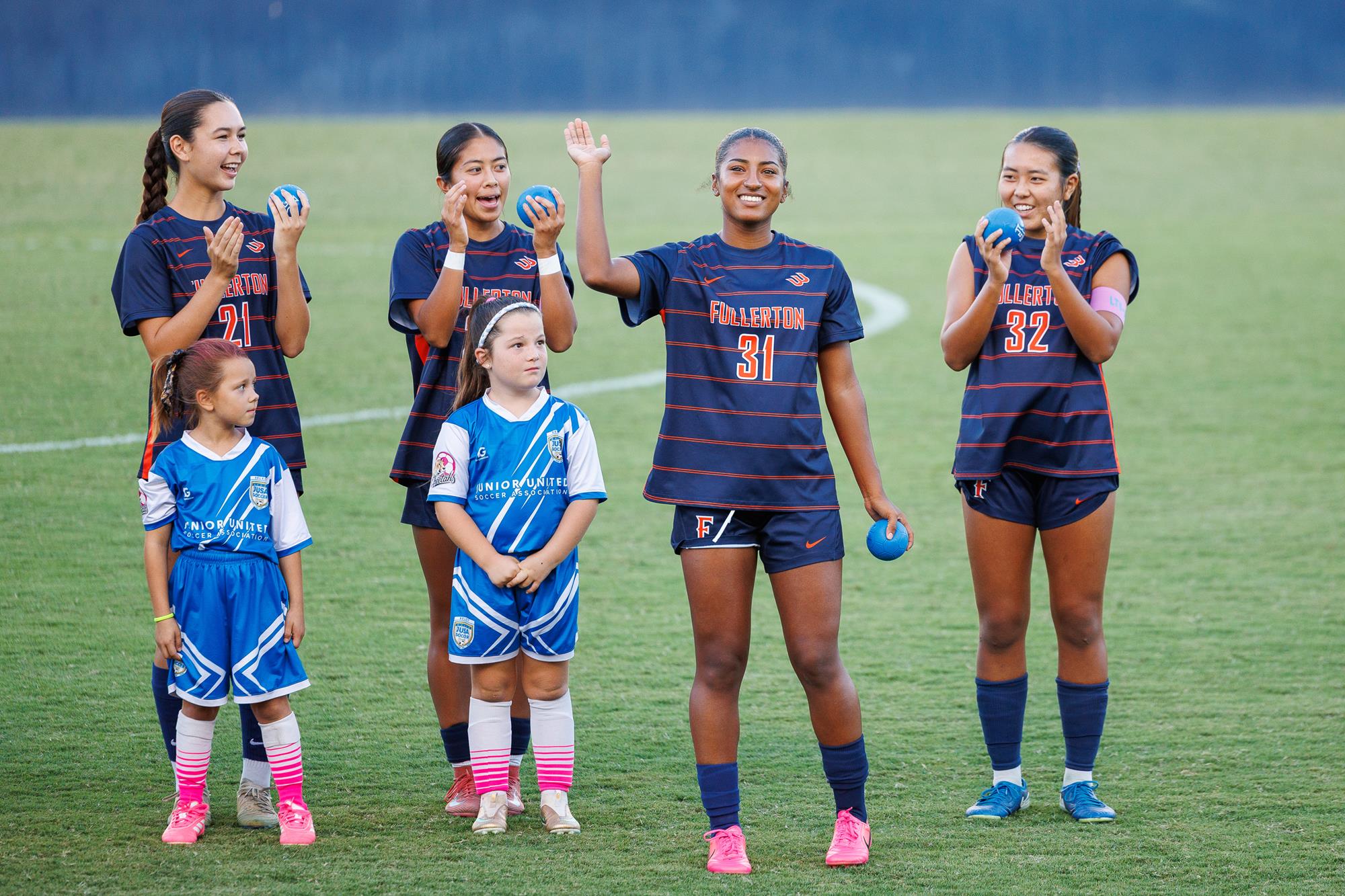
How do you use your sport as a form of expression? What other forms of expression do you gravitate toward?
Rivera — Soccer is where I express my passion, determination, and work ethic. I come from a Hispanic family that has worked incredibly hard and made sacrifices to give me opportunities, so every time I step onto the field, I carry that strength with me. I want my competition to represent both me and the people who helped me get there. Outside of soccer, I love music and going to concerts because they allow me to experience different artists, cultures, and emotions.
Villanueva — I am enamored by Spanish rock music. Some of my favorite bands and artists include Caifanes, Zoé, Maná, Héroes del Silencio, Duncan Dhu, and Soda Stereo. I grew up listening to these bands with my dad, who would blast their music through the speakers of our 4Runner on the way to my soccer practices. At the time, it was simply something we did together. Looking back, though, I realize those songs became tied to some of my earliest soccer memories and my relationship with my dad. This might sound silly to say, but I feel like I play soccer the way these songs sound. There is something about the rhythm, emotion, and energy of Spanish rock that feels natural to me. When I listen to these songs, I feel the same way I do when the ball is at my feet. There is a sense of freedom and instinct that is difficult to put into words. The music can be unpredictable, smooth, intense, or emotional, and I feel like my style of play carries those same qualities. For me, music and soccer are more than just things I enjoy. They are ways I connect with my culture and with my family. Every time I hear those songs, I am reminded of sitting in the car with my dad on the way to practice. And every time I step onto the field, I carry a little piece of those memories with me. In a way, the music I grew up listening to helped shape not only the person I am, but also the way I express myself through soccer.
What is a favorite celebration, custom, food or tradition that connects you to your Hispanic and Latino heritage?
Rivera — One tradition that makes me feel especially connected to my heritage is making Guatemalan tamales with my family. It is about much more than the food. It is the time we spend together, the stories we share, and the tradition being passed from one generation to the next. It reminds me that culture is something we continue to create together.
Villanueva — My favorite tradition and celebration is Día de los Muertos. I love how this special tradition is celebrated not only in Mexico but also by people and communities all over the world. What I enjoy most is that Día de los Muertos allows us to honor and remember our loved ones who have passed away. I think it is a beautiful way to celebrate their lives, share memories, and keep their presence and stories alive within our families. My favorite food is arroz, especially the arroz that my Tía Elle makes. There is something special about eating food that is made by someone in your family because it always feels comforting and reminds me of home. I also love the amazing pozole verde that my dad makes for me on occasion. Both dishes are some of my favorites because they are.
This year's theme is "Together, We Are More." What does that message mean to you, and how have you experienced the power of togetherness within your family, team, or community?
Rivera — To me, “Together, We Are More” means that even during the most painful moments, we can find strength in the people around us. During our 2025 season, our teammates Lauren Turner and Ashlyn Gwynn were seriously injured in an accident. Our team faced an overwhelming amount of fear and uncertainty, and later experienced unimaginable heartbreak when Lauren sadly passed away. Through it all, we stayed close, supported one another, and continued to compete for Lauren, Ashlyn, and each other. We were going through one of the hardest experiences of our lives, but we still found the strength to show up and fight together. That season taught me that a team is much more than the players who step onto the field. It is a family that carries one another when the weight becomes too heavy to carry alone.
Villanueva — I think the message of this year’s theme is that the more we stick together and fight for one another, the stronger we will be as a community. During these recent times, I believe it is especially important for us to come together as a Hispanic/Latino community and support one another. We all have different experiences and backgrounds, but our voices can have a greater impact when we use them together. I think it is important to speak up, stand up for one another, and use our voices to help create positive change. By staying united and supporting each other.
What are some challenges you've faced as a Hispanic and Latino individual, and how have you overcome them?
Rivera — As a Hispanic athlete, I have sometimes felt underestimated because I may not look like the tallest, fastest, or most physically dominant player. It can be easy for people to overlook you before allowing you to show what you can do. Instead of allowing that to discourage me, I use it as motivation. I have learned that my effort, intelligence, heart, and consistency can speak louder than someone’s first impression of me.
Villanueva — I feel like every day is a challenge for my community. I have witnessed families being torn apart and children being left to fend for themselves, not knowing where their parents are or if they will ever see them again. It is heartbreaking to see people in my community face so much uncertainty simply because they are trying to build a better life for themselves and their families. Many work some of the hardest jobs, doing work that often goes unnoticed or unappreciated, all so they can provide for the people they love. As a proud daughter of an immigrant, I feel that I have a responsibility to stand up for my community and my family. I know that the sacrifices made by those who came before me have helped give me the opportunities I have today. Because of that, I want to use my voice to speak up for what I believe is right, support those who may not have a voice, and help create positive change. I am proud of where I come from, and I want to continue honoring my family and my community by standing together with them and advocating for a better future.
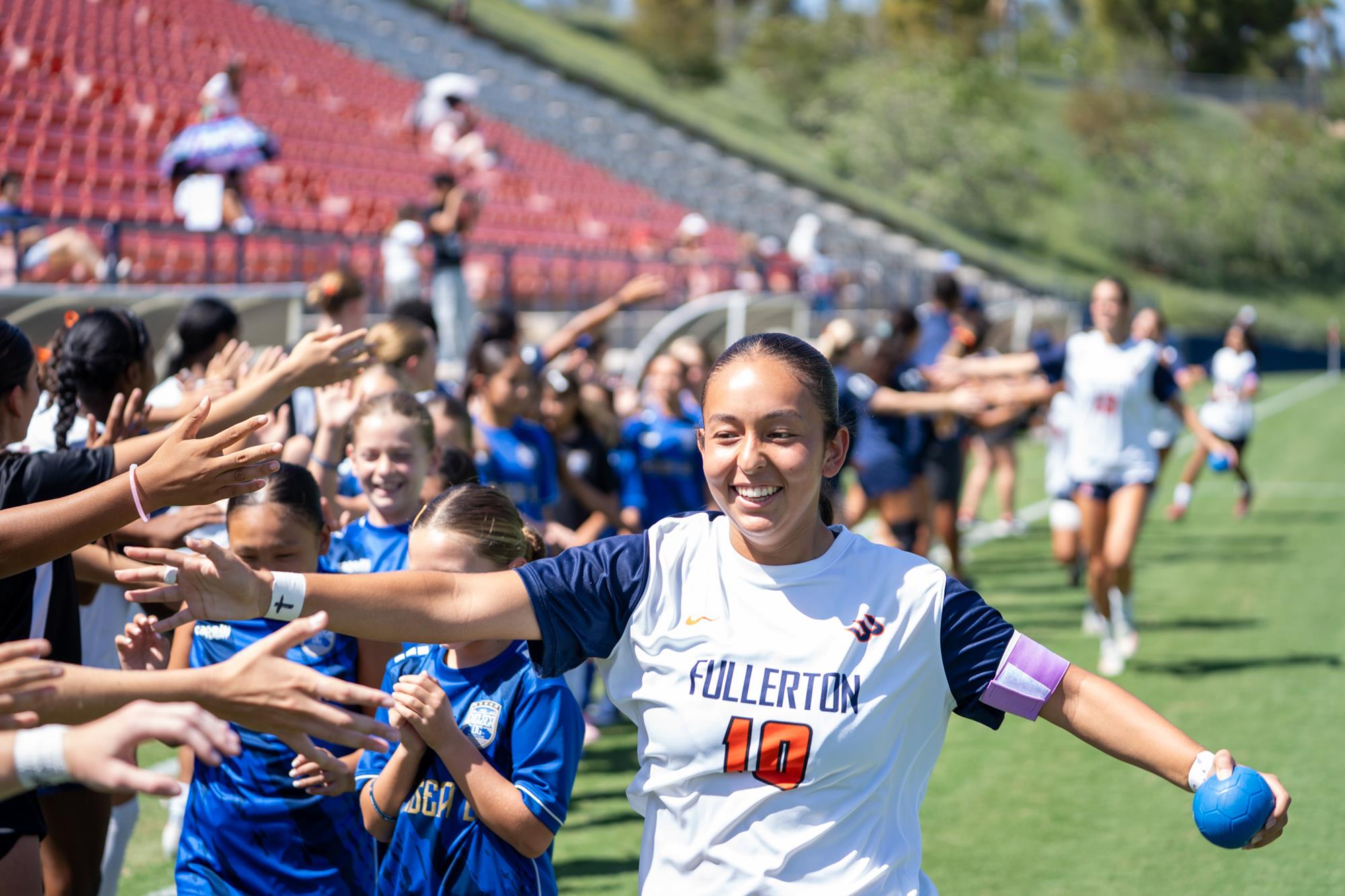
What advice would you give your younger self or another young Hispanic and Latino athlete?
Rivera — My advice to younger Hispanic athletes is to never let being underestimated make you doubt yourself. Work hard, stay connected to the reason you began playing, and understand that every challenge can teach you something valuable. Most importantly, appreciate every practice, game, teammate, and memory because the opportunity will not last forever. Make every moment count.
How can college athletic programs better support and represent Hispanic and Latino student-athletes, staff, and their experiences?
Rivera — College athletic programs can better support Hispanic and Latino athletes by creating spaces where they feel seen, heard, and represented. This includes hiring more Hispanic and Latino coaches and staff, celebrating different cultures, and giving athletes opportunities to share their experiences. Representation matters because seeing people from similar backgrounds in leadership positions reminds younger athletes that they belong and can achieve those roles too.
Who is a Hispanic or Latino administrator, coach, or athlete you look up to, and why?
Rivera— A Hispanic athlete I look up to is Lionel Messi. He was often underestimated because of his size, but he never allowed that to define his ability or limit what he could accomplish. I admire his work ethic, humility, and the way he leads through his actions. His journey reminds me that talent, heart, and determination can be more powerful than someone’s first impression of you.
Who is a Hispanic or Latino administrator, coach, or athlete you look up to, and why?
Rivera— Being Mexican and Guatemalan is something I carry with pride every time I step onto the field. I know that my opportunities are connected to the sacrifices made by the people who came before me. I hope to honor them through the way I work, compete, and represent my community while also showing younger Hispanic and Latino athletes that they belong in every space they dream of entering.
Gallery: (10-10-2026) HHM: CSF WSOC's Cassie and Jenna