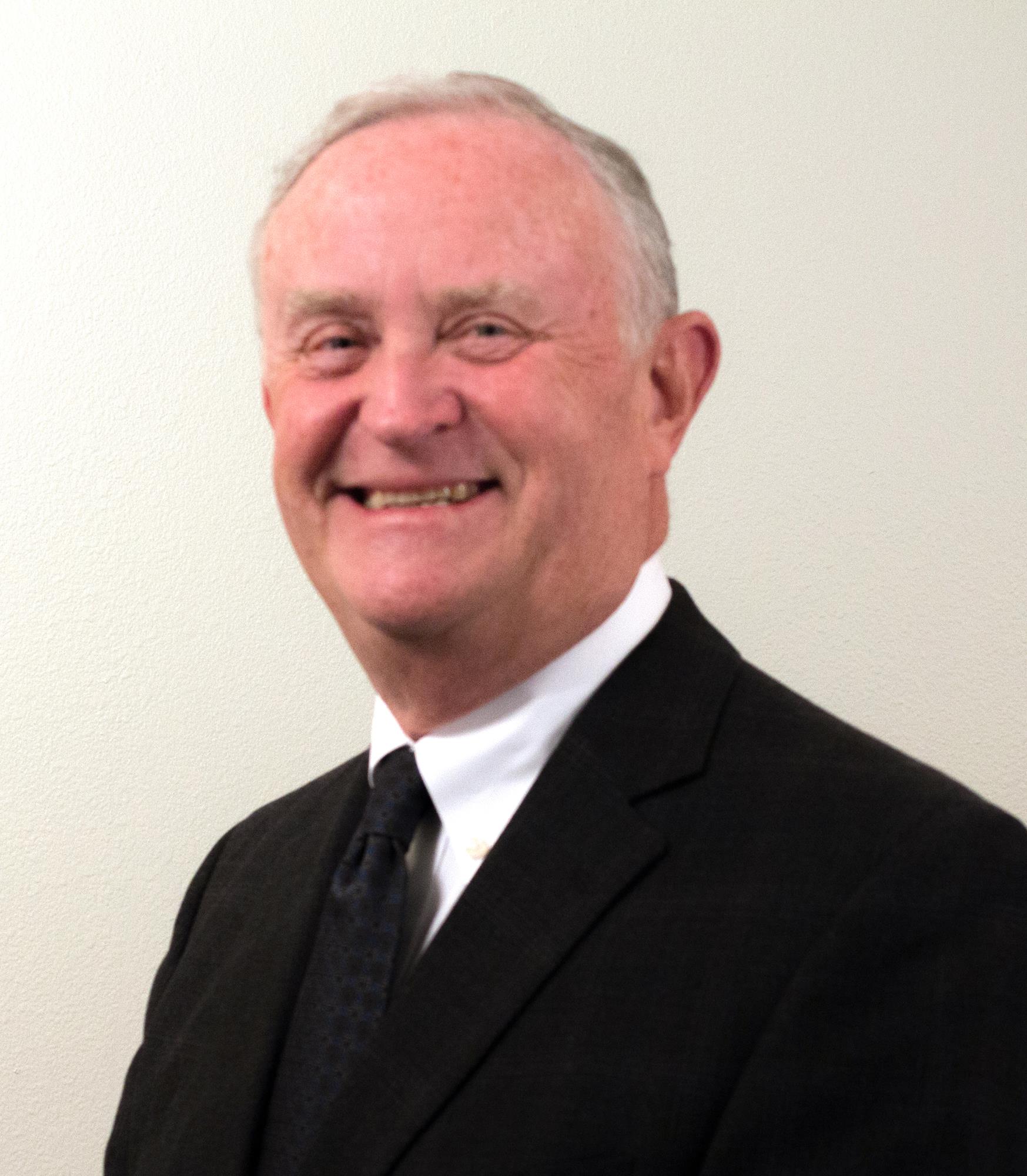
DENNIS FARRELL – COMMISSIONER
Courtney Sweet of Big West Productions sat down to talk with Dennis Farrell in his final Q&A as commissioner of the Big West.
Courtney: After 40 years total and 28 years as the commissioner of the Big West, Dennis Farrell is leaving as he’s retiring. We could not let him leave without one final interview. We’re sad to see you go, but we’re excited. It’s bittersweet, isn’t it?
Dennis: It certainly is. Forty years has gone by in a blink of an eye from my standpoint. It is hard to believe it’s been that long.
Courtney: Why now? What were the deciding factors that helped you come to this decision?
Dennis: There was a personal reason and a professional reason. I’ll start with a little anecdote. A year ago, every year I have some of my high school buddies come to the basketball tournament at Honda Center. I grew up here in Orange County so I have a lot of local contacts. So they came to the basketball tournament as they typically do, and they were hanging out having a great time, enjoying the games and all that. I was there in my official capacity, in my suit and tie, and I said to them, “I want to see a show of hands.”
There were about four or five of them.
“How many of you people are retired?”
They all raised their hands.
I said, “How many of you are grandparents?”
They all raised their hands.
I said, “I don’t know why I’m hanging out with you old fogies. I’m still working, I don’t have any grandchildren, what’s wrong with this picture?”
In the last year since then, I have become a grandfather. In January, a little granddaughter, Logan, was born, and I’m looking forward to spending more time with her. From that standpoint, the timing was right.
From a professional standpoint, we’re coming into a new era of the conference with Cal State Bakersfield and UC San Diego joining the conference on July 1. In another year or two, we have a number of contracts that are coming up, such as our ESPN agreement, our agreement with the Honda Center in Anaheim. We’ve got our office lease that’s up in a year. I just felt that this was the right time to leave to allow my successor the opportunity to shape the conference’s future in their vision. And so it just sounded right. The years 40 and 28 really didn’t mean anything to me from that standpoint.
Courtney: Over those years – the 40 and 28 as you mentioned – what are the things that you’ve seen from the conference as far as growth stand out the most?
Dennis: Having been with the conference for 40 years, there’s only two other individuals that I know of across the country who have been with their respective Division I conferences actually longer than I have with the Big West Conference. But during those 40 years, I feel like I’ve actually worked for at least two conferences, if not three or four conferences. When I joined the conference back in 1980, we were known as the Pacific Coast Athletic Association. We were all California schools with one exception, that was Utah State. We were primarily a football conference. We had no women’s sports as part of the conference at the time.
So over the years, the conference grew in numbers, bringing in UNLV and New Mexico State. It grew in geography with those two schools. We changed the name of the conference to fit the geographic footprint that we were at that point. Some schools started leaving for football reasons, and we let them go. So over that 40-year period, we’ve had what I believe 21 full-time members of the conference, and there’s only four of what will soon be 11 conference members that have been part of the conference those whole 40 years – and that’s UC Irvine, Long Beach State, Cal State Fullerton and UC Santa Barbara.
Never in my wildest dream did I think I would stay with the conference for 40 years. In fact, when I was hired I figured maybe I’d be there for a year or two, and then move on to another position. But it’s never gotten stale because of the fact that we’ve grown, changed, we dropped football and we went back to our roots as an all-California conference, brought in Hawai‘i. Today, the 50-year anniversary of the conference really was marked with a lot of changes and turmoil in conference membership because of football with schools leaving to seek greener pastures elsewhere.
As I leave the conference, I believe that we are the most stable we’ve ever been in our history, and I do believe we’re one of the most stable Division I conferences too. When we became an all-California conference again in the early 2000’s, people ridiculed us as becoming a bus league. Now I’m on commissioner calls – I’m on at least four commissioner calls a week now – and they’re all worried about what’s going to happen with the pandemic and travel of teams and things of that nature. Now, all of a sudden, we look like visionaries. I’m pretty proud of that fact too.
Courtney: I can imagine what your closet must look like. You’ve got all different logos, swag from so many different schools and conference names.
Dennis: My wife got to the point where every shirt I’d bring home, I’d have to throw out two. That was her way of culling the herd basically.
Courtney: With all the different membership and change, what are one or two moments that really stand out in the history of the conference to you?
Dennis: Obviously, the national championships that we’ve won over those periods of time. UNLV’s men’s basketball championship in 1990 was awesome because it was UNLV against Duke and Georgia Tech. There were two ACC teams that were in the Final Four that year. The fans of those two schools started chanting “ACC, ACC” and the UNLV fans responded with a chant of “Big West, Big West.” That was really pretty cool.
But we’ve won championships in women’s volleyball, baseball, men’s soccer, men’s volleyball. We’ve had a women’s Final Four team in basketball in the past. All those were really special moments. But I think those are obvious.
The not so obvious are maybe some of the personal interactions that I’ve had with some student-athletes in the conference, and working in a conference office, you don’t have that day-to-day interaction with the student-athletes that you have on a college campus. I’ve gotten to know a few of our student-athletes through the Student Athlete Advisory Committee or the scholar-athlete function that we have every year. I remember one time a student-athlete came up to me and thanked me profusely for helping her work through an NCAA eligibility issue. That just struck home. That’s why we’re in this business. The championships are great and exciting and all that, but at the end of the day, we’re helping young people realize their dreams, they’re getting a college education while still pursuing their passion for whatever sport they might be involved in.
And certainly 99 percent of the student-athletes that come through our conference will never have a professional career, so this provides them the vehicle for that college education, as well as teaching the life lessons of teamwork, sacrifice, commitment, time management.
Courtney: You can hear it in your voice, you can tell that you really love being a part of the conference and the job that you’ve been able to do.
Dennis: Forty years is not a job, it’s not a career – it’s a life basically. Certainly wasn’t what I set out to do out of college because when I graduated from college in the mid-70’s, the sports management industry and majors on college campuses were just in their infancy. So it wasn’t something that I had really viewed as being my career goal. I didn’t even really apply for the position here. I had been recommended for it. The commissioner at the time called me up on April Fool’s Day. I thought it was a joke one of my friends was playing on me. Went in, didn’t even know anything about conference work. I had gone to a conference school, so I knew about the PCAA. That was Oz or something. I came in and I was able to be involved in a lot of different facets of the industry because we had such a small staff back then that you wore a lot of different hats, and I just found it fascinating.
Courtney: Take us behind the curtain of Oz. Very few people in the country get to say they are a commissioner of a college conference. What are a few things that people would be surprised about this position?
Dennis: I’m not sure what people would be surprised about because I’m not sure that people really understand what we do. For 40 years as I’ve told people what I do for a living, it’s not like you just come right out and say, “I’m the commissioner of the Big West Conference,” because most of the time you get blank stares. They’ll ask you, “Is that a full-time job?”
But it’s a fascinating job because we run championships, we organize all of our coaches groups and administrators in meetings at the conference level to make decisions about how we adjudicate their particular sports. We have a compliance program that educates our members about NCAA and Big West rules, as well as ensuring that they follow those rules. We market the conference. There’s all those facets of what we do in the conference office that probably very few people, maybe even our members, don’t quite understand what we do.
Courtney: Speaking of Commissioner (Dan) Butterly, do you have a message that you want to share with him as you go into this new chapter?
Dennis: There’s a couple of messages that I would tell him. They’re probably both clichés but I live by them and they’ve served me pretty well over the years. The first one is to take your job seriously but don’t take yourself seriously.
We’ve been very fortunate to have had a family culture in the Big West Conference that goes back the 40 years I’ve been with the conference, where our administrators and coaches – for the most part – and it’s not all coaches, but the administrators 100 percent – have gotten to know each other on personal levels, and that’s so important as you’re dealing with in the future, some very difficult decisions to be made that you want people to respect each other when they come out of those meeting rooms. They may be on the losing end of a critical vote of some sort. You want them to say that I’m unhappy that so and so voted the way they did, but I respect and like them. And that goes a long way in keeping the conference together because we are a family of 11 institutions.
The other message is probably a cliché, but surround yourself with quality staff people that you respect and cherish their feedback and honesty, and accept that feedback. I couldn’t have done this job for as long as I have if I didn’t have the senior staff that I’ve had of Rob Halvaks, Erica Monteabaro and Jody McRoberts. Between the four of us, we’ve had 120 years of experience in the conference office. I’ve always respected their opinions, asked for their opinions, been very collaborative in my management style. And I would suggest that’s probably the way Dan should try to govern as well.
Courtney: Do you think that the collaboration mentality is a key to having that consistency?
Dennis: I don’t know if it’s the key. I think that it helps. I think the staff people that I’ve had have enjoyed living where they live, in southern California. If our office had been someplace else around the country, I might have had more turnover than that. But I think that if people feel empowered, that helps them wake up every day and go to work. I’ve always recognized what my shortfalls are, and tried to surround myself with people that can fill in those gaps that I might have. Rob is certainly a financial genius. Erica is a governance guru, well respected across the country. Jody was brilliant with scheduling and conducting championships. They’ve made my job a heck of a lot easier than it would have been otherwise.
Courtney: To have both the men’s and women’s basketball tournaments to be at Honda Center, why was that so important to you to have that in place before you retired?
Dennis: Getting the women’s tournament in the same building as the men’s for all the rounds is really important. We felt bad over the last few years when we were unable to do that because of the Honda Center’s commitment to other properties. They’ve got the NHL Ducks that they have to work around their schedule.
It became more and more important as we really are committed to treating our women’s athletes with the same equity and fairness that we do the men, so it was important for us to get that done for them.
The Honda Center – there’s not a better facility hosting a Division I conference tournament in America. I don’t care who it is, whether it’s the SEC, Big 10, Pac 12, whatever. I put the Honda Center up against any of those facilities. The owner, Henry Samueli, and the management team of Tim Ryan, Kevin Starkey and Quinn Mackin have worked endlessly to keep that facility as state-of-the-art.
When you walk into that building, you don’t feel like you’re walking into a sporting arena, you feel like you’re walking into the lobby of a luxury hotel with the marble floors and everything. We moved there 10 years ago. Tim Ryan and I go way, way back to when he was working at the Long Beach Arena, and we had our basketball tournaments there in the late 80’s and early 90’s. He’s a graduate of a Big West school, so he’s committed to the conference as well. It was important for us to carve out a facility that would be first class for our marquee event, for our student-athletes experience, for our fans experience, and for our coaches, from their recruiting perspective as well.
Courtney: With Big West Productions and the ESPN3 contract, we just finished year seven and about to go to year eight. Now streaming is all the rage, and you’ve got all the different services. Even 7 or 8 years ago when this conversation started, it was cutting edge. Conferences weren’t as on board as they are now. What was attractive to you about the potential of partnering with ESPN on their streaming platform?
Dennis: Obviously, we had been partners with ESPN for many years going back to the late 80’s. We were part of the original “Big Monday” men’s basketball package with UNLV and all. We’ve had a long standing relationship with ESPN on the linear side.
What was appealing to me was that our coaches craved quantity of broadcasts, they craved being able to get into recruits homes to tell mom and dad’s that if you live back east or whatever, you can watch your son or daughter play on ESPN regardless of what the platform was. And so, it was cutting edge 7 or 8 years ago because it really did cut down the cost of producing those quantity of games that we craved. We went from probably paying over $30,000 for a single game production to really getting those down into the $5,000-6,000 range. It was important for the quantity to be there, but then also we knew that with ESPN, we wouldn’t be sacrificing quality in producing those games too.
We’ve been extremely fortunate to bring in some really solid pros to help build this production platform for us, going back to Andrew Lahey, Steve Chen, you and Misha (Padilla). Everybody who has been involved over the years have brought professionalism and a commitment to quality that we’ve been most proud of. We put our production values up against anybody. Yet we’re doing it in an economical fashion.
Courtney: How about Big West baseball? You’ve been part of the Division I Committee. What are you most proud of?
Dennis: Big West baseball is as good as any conference in the country. Flat out. It’s recognized as that also. I loved one year when they put the bracket breakdown on TV for the announcement of the tournament that year, and then they had how many mid-major conferences had multiple teams in the tournament, and I’m watching this, and they had left us out. So we’ve always been called a mid-major conference.
And then they go to the next screen and they show the major conferences that had multiple teams, and there we were with the Pac-12, SEC and ACC. And that was really fulfilling, but it also hit home on the point that we’re considered a major college baseball power.
Serving on the NCAA Committee was without a doubt the most enjoyable experience of my 40-year career. I just really enjoyed getting involved in college baseball at the grassroots, just following games from day one of the season and tracking on teams, and carrying it through the selection weekend, and working with nine other individuals that were all committed to do the right thing, to put the best teams in the tournament and seed it appropriately. It was just an unbelievable experience that I will always cherish.
Over and above that, we were one of four conferences that had placed a team in the College World Series four straight years, and each of those were different teams. That was something for us to really crow about with Big West baseball.
Courtney: You’re talking to different people all across the country in college athletics. What is that camaraderie like – the fraternity of commissioners because there are very few of you?
Dennis: It’s a fraternity/sorority because appropriately enough, the number of women commissioners has grown tremendously over the last 10 years. We get together for meetings three times a year, and it’s a great time to get together, and get bonded with each other. While we’re competitive and want our teams to beat their teams in the field of athletic competition, there are just 31 other people that can understand what we go through during the course of an academic year in dealing with all the problems of running a conference. I will greatly miss that camaraderie in retirement as well.
Courtney: Did you hear from a bunch of them when you announced your retirement?
Dennis: Oh yeah. We’re having about four Zoom meetings a week, and they said they’re going to have some sort of a virtual celebration for me because I’m the only commissioner that’s retiring this year, and typically we honor the retirees at the June meetings.
Courtney: What are the things that you think you’re going to miss the most?
Dennis: The people. Just being in the trenches. The battles. Those relationships that you build up over the years – I will definitely miss that. The stuff I won’t miss? I have not had a day of unemployment since May of 1974. I think Gerald Ford was President of the United States the last day I woke up and not had to worry about something work related. So on July 1, I’m looking forward to waking up in the morning and not having to worry about something, not having to worry about a meeting to be at, a trip to go on, a championship to oversee. I might wander over to Starbucks and pick myself up a coffee and then decide what I want to do the rest of the day.
Courtney: When you look back over the 40 years total, what do you think this job has taught you the most?
Dennis: It’s taught me everything I know in life practically. It’s taught me to be a little more political. Because being a commissioner is a political position and I don’t mean that in the most negative of terms. Politics is learning how to rally people toward a common goal. You have to make compromises and outwork people. That’s probably the most I have learned is how to work with people, make them feel like they’re the ones making decisions, and hopefully trying to shepherd them to a decision that you think is the right decision too.
Courtney: One of the things that I love about the Big West is the motto “Leave A Legacy.” When people hear your name going forward, what do you hope they think about?
Dennis: I hope they don’t think “thank god that guy is finally out of here.” (laughs) I don’t want that to be my legacy. Rob and I especially know the battles that were fought over the last 28 years of keeping the conference together first off because there was a time when schools were defecting, and we had to do some creative things to just keep the conference together, and now have it be a successful and respected conference. In our hearts, we know we’ve helped forge that, so I guess if there’s a legacy that’s where the conference is today.
Courtney: It’s a family atmosphere, so it’s important recognizing the team and not just your individual accomplishments. But at the basketball tournament, throughout the spring season, when you go to events, it would have been a wonderful opportunity for people to tell you how they feel, well wishes, vice versa. COVID-19 happened and clearly that has been a whole thing. What message would you like to share with the Big West family since we have this opportunity that maybe you didn’t get to because of everything that’s going on?
Dennis: Just to thank everybody for their sacrifices and commitments, and not just the people that are working at our institutions or in the conference office today. We’re all a part of this thing. The DNA of the conference – Lew Cryer hired me. He was the commissioner of the conference back in 1980. The conference office was he and I, and a full and part-time secretary. That was the whole conference office staff. But over the years, working with the various athletic directors, senior women administrators, the coaches – they’ve all left a legacy in this conference. I’m just honored to have been a part of the conference for as long as I have been, and will certainly be proud to watch it be successful in the future as well.